
On the equity volume front, 7.66 lakh shares of the company were traded on BSE and over 91 lakh shares changed hands at NSE during the day.

Mukesh Ambani voluntarily capped his compensation at Rs 15 crore in October 2009 amid a debate over right-sizing of CEO salaries.
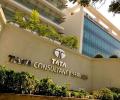
The market capitalisation of Tata Consultancy Services (TCS) on Wednesday breached the Rs 13.5 lakh crore mark -- the second company after Reliance Industries Ltd to achieve the feat. At close of trade, the market valuation of TCS stood at Rs 13,53,667.85 crore on BSE. The company had touched the Rs 13 lakh crore valuation level on August 17, when its market capitalisation (m-cap) stood at Rs 13,14,051.01 crore.
The improvement in the performance of actively managed mutual fund (MF) schemes is acting as a key tailwind for the nearly Rs 50 trillion industry, Kotak Institutional Equities (KIE) said in a report. The report adds that the two largest listed asset management companies (AMCs) - HDFC and Nippon India - are likely to be the biggest beneficiaries. "The industry has a solid track record of delivering alpha on 10-year returns (70-80 per cent of assets under management (AUM) beat the benchmark), with shorter duration performance also on an upswing.

The cumulative m-cap of the companies listed on the BSE soared to a new peak of Rs 82,02,907 crore at 1200 hours.

We asked colleagues, present and past, to reflect on a man who has made such a difference to their lives and careers. Here it is then, a rich collection of memories that offer enchanting glimpses of the enigmatic Ajit Balakrishnan.

From the Sensex pack, Infosys tanked over 8 per cent after the company reported a lower-than-expected 11 per cent rise in net profit for the June quarter and delivered a shocker as it slashed its FY24 growth outlook to 1-3.5 per cent on delayed decision-making by clients amid global macro uncertainties. Hindustan Unilever, HCL Technologies, Wipro, and Tech Mahindra were the other major laggards. On the other hand, Larsen & Toubro rose the most by 3.88 per cent after it bagged an order of worth over Rs 7,000 crore from the bullet train project.

Thanks to a continued rise in the market capitalisation of the Adani Group companies, its promoter Gautam Adani is now the second richest Asian and fourteenth richest businessman in the world with a networth of $66.5 billion. Reliance Industries promoter Mukesh Ambani remains the wealthiest businessman in Asia with a networth of around $76.5 billion, according to Bloomberg data. The six Adani Group companies had combined market capitalisation of Rs 8.36 trillion as on Thursday, against Reliance Industries' market capitalisation of Rs 12.6 trillion. Adani Green tops the charts in the group with m-cap with Rs 1.99 trillion.

Tata Steel was the top gainer in the Sensex pack, rallying nearly 7 per cent, followed by Bajaj Finserv, SBI, HCL Tech, Sun Pharma, Bajaj Finance and Reliance Industries. NSE Nifty advanced 69.05 points to 15,778.45.

The combined market valuation of top six Sensex companies surged by Rs 26,346 crore last week, with Reliance Industries and HDFC contributing the most to the gains.
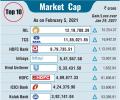
Reliance Industries Limited was leading the chart of the top-10 valued domestic companies, followed by Tata Consultancy Services, HDFC Bank, Infosys, Hindustan Unilever Limited, HDFC, ICICI Bank, Kotak Mahindra Bank, State Bank of India and Bajaj Finance Limited.

'To achieve a corpus of Rs 10 crores in the coming years, I would suggest you increase your SIP, advises Nikunj Saraf, vice president, Choice Wealth.

The remuneration for 2009-10 fiscal to Mukesh Ambani, the country's richest person with a net worth of $29 billion and fourth wealthiest in the world as per Forbes magazine, is still higher than any other director of Reliance Industries.

In a memorable year for the equity market, Dalal Street investors added a whopping Rs 81.90 lakh crore to their wealth in 2023 as a raft of positive factors powered a stellar rally in stocks. Experts said India's strong macroeconomic fundamentals, political stability owing to the BJP's success in recent elections in three significant states, optimistic corporate earnings outlook, signals from the US Federal Reserve about three prospective rate cuts next year and heavy retail investors participation played a major role in fuelling the stock market rally in 2023. In the year 2023, the 30-share BSE Sensex jumped 11,399.52 points or 18.73 per cent.

Equity benchmark index Sensex buckled under selling pressure for the second straight session to close below the 65k mark on Friday, as investors offloaded IT, teck and metal stocks amid a bearish global trend. Besides, fresh foreign fund outflows also hit investor sentiments, traders said. In a volatile trade, the 30-share BSE Sensex declined 202.36 points or 0.31 per cent to settle at 64,948.66.

What is more surprising is that a surge in Russian oil supplies has come after the G7 imposed stringent sanctions on Moscow.
The upsurge in capital market seems to have bypassed the information technology sector where the top 25 companies including Wipro, Infosys, HCL and NIIT, lost almost Rs 66,500 crore in market value since March 8, 2001.

IndusInd Bank was the top loser in the Sensex pack, shedding around 2 per cent, followed by Titan, Tata Steel, M&M, Bajaj Finance and SBI. On the other hand, Bharti Airtel, HCL Tech, Tech Mahindra and Kotak Bank were among the gainers. NSE Nifty inched 8.95 points lower to 16,249.85 in early trade.
Equity benchmarks shrugged off lacklustre global cues to clock smart gains on Tuesday, buoyed by strong buying interest in index heavyweights Reliance Industries and HDFC twins. However, a depreciating rupee and unabated foreign fund outflows capped the gains, traders said. The 30-share BSE Sensex rallied 562.75 points or 0.94 per cent to settle at 60,655.72.

RIL-BP currently produce gas from Dhirubhai-1 and 3 field and oil and gas from MA field, three of the over one-and-half dozen discoveries made in KG-D6 block

Kotak Mahindra Bank was the biggest loser from the Sensex pack, skidding 1.83 per cent, followed by Axis Bank, NTPC, Hindustan Unilever, ICICI Bank, Bharti Airtel, Reliance Industries, HCL Technologies, IndusInd Bank and Nestle. In contrast, Bajaj Finance, Bajaj Finserv, Tech Mahindra, Tata Consultancy Services, Titan, Infosys, HDFC Bank, HDFC and ITC were the gainers.

Nikunj Saraf, Vice President Choice Wealth, answers your queries.

The top-10 valued companies added a whopping Rs 2.72 lakh crore to their market valuation last week, as the domestic equity benchmarks witnessed heavy buying tracking an overall bullish trend in global equities. The benchmark indices made strong gains in the holiday-truncated week. The 30-share BSE Sensex climbed 2,313.63 points or 4.16 per cent, while the NSE Nifty advanced 656.60 points or 3.95 per cent. Mirroring the bullish trend in the broader market, the combined market capitalisation (m-cap) of the country's top-10 firms zoomed by Rs 2,72,184.67 crore during last week.

Indian imports of Russian crude oil may stabilise or even decline in 2024 from record 2023 levels amid shrinking discounts, lower output, and a rebound in West Asian supplies, according to the ship-tracking data and industry executives. This may impact the billions of dollars in annual savings that India made last year. Imports of Russian oil jumped by a record 140 per cent in calendar 2023 to 1.79 million barrels a day (b/d) from 740,400 b/d in 2022, when Russia marched into Ukraine in February, and from just 102,000 b/d in 2021, according to the data from Paris-based market intelligence agency Kpler.

An expert panel approved policy for development of gas fields.

The slowdown in corporate revenue growth over the last one year has begun to reflect in India Inc's capital expenditure, or capex. The country's top listed companies are going slow on fresh investment in capacity expansion, in line with a deceleration in their top line growth. The combined fixed assets of the listed companies, excluding banking, finance services and insurance (BFSI) and the government-owned oil & gas firms, were up 10.1 per cent year-on-year (Y-o-Y) during April-September 2023 (H1FY24) - the slowest in 18 months - as against 21.1 per cent Y-o-Y growth in H2FY23 (October 2022-March 2023) and 11.6 per cent growth in the April-September 2022 period (H1FY23).

Nikunj Saraf, Vice President Choice Wealth, answers your queries.
NTPC was the top gainer in the Sensex pack, rallying around 4 per cent, followed by Titan, SBI, HUL, IndusInd Bank and UltraTech Cement. NSE Nifty advanced 63.15 points to 15,746.50.

Bajaj Finance was the top gainer in the Sensex pack, rising around 3 per cent, followed by Bharti Airtel, Sun Pharma, Reliance Industries and SBI. NSE Nifty advanced 184.60 points to 16,955.45.

Nikunj Saraf, Vice President Choice Wealth, answers your queries.

'The impact of CEO transition is fairly even for stocks, with about half (53 per cent) of the events not producing any change in the relative performance of the stock.'

Nikunj Saraf, Vice President Choice Wealth, answers your queries.

Nikunj Saraf, Vice President Choice Wealth, answers your queries.

The sustainable impact of this process is under scrutiny, Tripathi added.

Following the sharp rally in stocks, investor wealth rose by Rs 1,39,948 crore to Rs 1,10,70,610 crore.

Hindustan Aeronautics Limited on Wednesday handed over the first LCA Tejas twin-seater aircraft to the Indian Air Force.

Sun Pharma's Dilip Shanghvi is India's richest person.

Tata Sons chairman Natarajan Chandrasekaran was paid Rs. 113 crore as remuneration for 2022-23 (FY23), including Rs. 100 crore as commission on profit. Chandrasekaran, 60, often referred to as Chandra, received a remuneration of Rs. 109 crore in 2021-22 (FY22). With this, Chandra has emerged as one of the highest-paid chief executive officers (CEO) in Corporate India for FY23.

Billionaire Mukesh Ambani for the second year in a row drew no salary from his flagship firm Reliance Industries in the last fiscal as he voluntarily gave up remuneration in light of the pandemic hitting the business and economy. In its latest annual report, Reliance said Ambani's remuneration for the financial year 2020-21 was "nil". In June 2020, Mukesh D Ambani, chairman and managing director of Reliance Industries, voluntarily decided to forego his salary for the year 2020-21, in light of the COVID-19 outbreak in India, which exacted a huge toll on the societal, economic and industrial health of the nation.
